
6
BoFEP’s
Beginnings
•Ad
hoc group - FMESP
•Shorebirds
& mudflats
•Ecological
problems
•Fragmented
research
•Information
update need
•Overview
document
•Issues
summary
•Science
Workshop (1996)
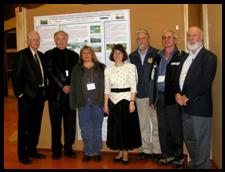
| In early 1995 a small group
of researchers began meeting periodically at the Acadia Centre for Estuarine
Research (ACER) at Acadia University in Wolfville to ruminate over this sorry
catalogue of environmental abuses and their ecological effects. This ad hoc
committee which eventually began to refer to itself as the Fundy Marine
Ecosystem Science Project (FMESP – awkwardly pronounced “Fee-messp” by most)
were particularly concerned about reports of changes in the nature of the
Bay’s iconic mudflats and the world renowned shorebird populations that
depend on them. |
|
| During these discussions, it
became apparent that there was a great deal of research and other
environmental projects being undertaken by organizations and agencies all
around the Bay. However much of this work was being carried out in relative
isolation and with little appreciation of the complex interlinked ecological
processes of the Bay as a whole. Indeed, it had been over two decades since
scientists and environmental managers from around the Bay had really got
together to consider the status of the Bay and the state of knowledge about
it. The frantic interest in tidal power in the 1970s and early 1980s had
stimulated much research and review, but this interest had soon faded. |
|
| The FMESP group felt that it
was time for a critical examination of what had been learned over the
subsequent decades that might shed some light on the ecological problems now
confronting the Bay. To this end the group compiled an overview document
summarizing advances in several fields and also tabulated the many issues
relating to the well-being of the Bay and its coastal communities. |
|
| FMESP then determined to
draw upon the expertise of the wider scientific and management communities to
evaluate the information and conclusions in the overview document and more
importantly what might be done collectively to promote the health and well being
of the Bay and its coastal communities. Thus was launched the first Bay of
Fundy Science Workshop at the Old Orchard Inn in Wolfville in late January
1996, attended by some 60 scientists and resource managers from both sides of
the Bay. |